
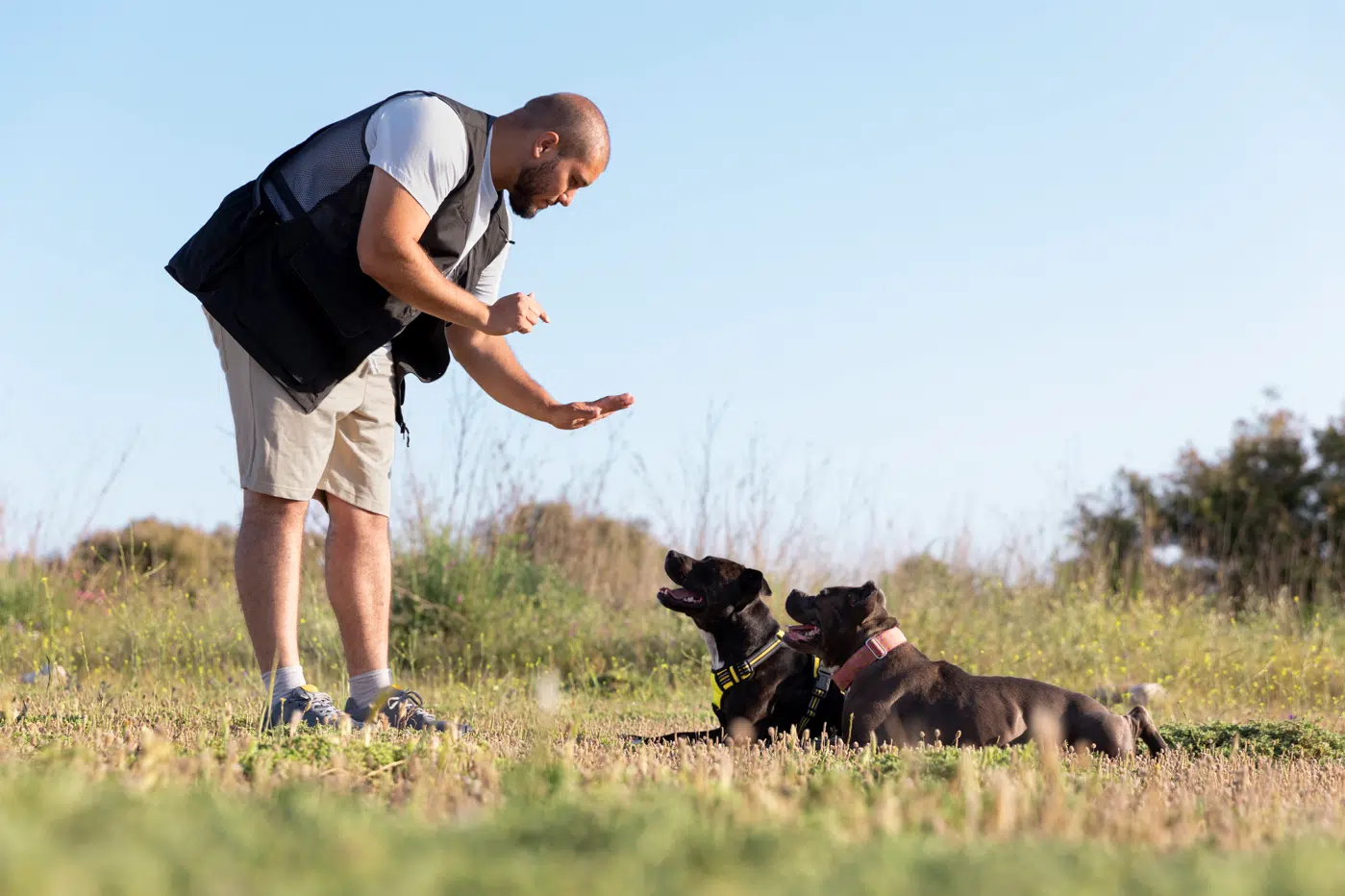
Teaching a dog to stay, okay, it sounds simple, but honestly, it can be trickier than you think. You start with the basics: sit, stay, repeat, but even that sometimes feels like a lot. Quiet space, clear cues, and eye contact, that’s where most dogs start to get it. Treats help, praise helps, and yeah, a few little mistakes will happen.
Some dogs pick it up fast, others not so much. You keep at it. And if you’re not sure, checking in with the best dog training advice or someone experienced can save you some headaches. Short daily practice is better than one long session, and over time, you’ll start seeing progress, little by little.
So, basics first. Sit, stay, sit again. Do it somewhere quiet so your dog isn’t overwhelmed. Give the same command every time, and reward immediately when they do it right.
Eye contact helps, but don’t freak out if they look away. A few seconds at first, then longer. And yes, patience. Dogs aren’t robots; they learn in bits and pieces. If they break the stay, reset calmly; don’t get frustrated. Repeat it. Eventually, they start understanding, and it becomes second nature.
Once they get the basics, it’s time to shake things up a little. A soft noise nearby, maybe someone walking past, that kind of thing. Don’t go full chaos yet, you know? If they hold the stay, give a treat. If not, take a step back and make it easier again.
The goal is focus, not perfection right away. Over time, they start learning that distractions aren’t a reason to bolt. Some dogs take longer; some are naturally chill. Just keep it consistent and don’t stress.
Verbal cues are like labels for the behavior. Say “stay” or “wait” in a calm, firm voice. Sometimes you might have to repeat it a few times in a session. That’s normal. Don’t overdo it, though, or your dog might get confused. Pair it with a treat or praise when they do it right.
Over time, even when the environment changes, they start associating that word with the action. Consistency here is key, even if it feels repetitive.
Treats, praise, toys, whatever works for your dog. Timing is everything. If you wait too long after the behavior, they won’t make the connection. Some dogs need a bigger reward than others; some are happy with just a little cheer.
At first, reward every correct stay, then gradually reduce the treats so they don’t rely on them. The key is positive, consistent reinforcement. Frustration helps no one, so keep sessions upbeat, even if progress is slow.
Next step: longer stays and more distance. Start with a few extra seconds, then minutes. Move to other rooms or outside eventually, and take small steps back. Reward immediately when they stay.
If they break the stay, calmly bring them back and try again. Over time, your dog learns that staying put is expected no matter how far you step away. It’s slow, but it works.
Dogs break stay for lots of reasons, maybe impatience, maybe distraction. Shorter intervals and gradually increasing time help. If your dog moves when you step away, back up a little, reward any success, then slowly increase the distance again.
Start in quiet spaces before adding more chaos. Frustration is natural for both of you, but patience and consistency are everything. Over time, your dog will stay reliably, and the command will become part of their behavior without constant prompting.
Related Topics: