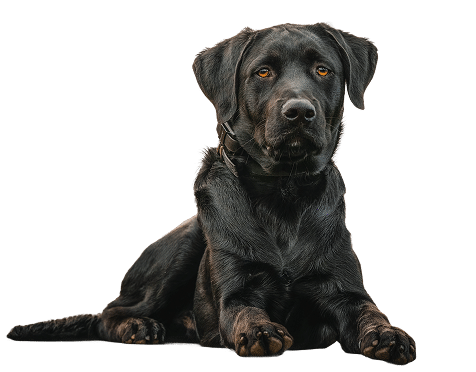
Herding dog breeds were developed to help people move and manage livestock. Border Collies, Australian Shepherds, German Shepherds, and Corgis are familiar examples, but the group includes dogs with very different appearances, coats, and working styles.
Many herding dogs are alert, active, and responsive to training. Those qualities can be rewarding in a pet, but intelligence does not make a dog an easy fit for every household. Understanding a breed’s background helps you decide whether its needs match the time, space, and activities you can offer.
What Makes a Dog a Herding Dog?
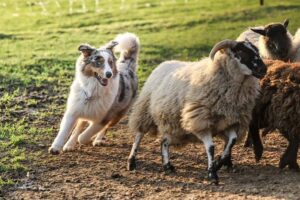
A herding dog’s traditional job involves influencing where livestock move. Depending on the task, a dog may gather scattered animals, help move a group forward, or keep animals within an area.
Herding dogs work in partnership with people, combining responses to cues with decisions about moving animals. These abilities reflect generations of selection for particular jobs rather than a single appearance or personality shared by every breed.
The American Kennel Club’s Herding Group became a separate group in 1983. Before then, its breeds were classified within the AKC Working Group.
Today, many of these dogs live as pets or participate in sports. Their working background still matters, even when there is no livestock nearby.

Different farms and landscapes called for different dogs. Managing sheep, moving cattle, and helping a handler over long distances are distinct tasks. Breeders selected dogs suited to the livestock, climate, terrain, and handling traditions around them.
That history helps explain why a short-legged Corgi and a larger German Shepherd can both belong to the herding group. The classification reflects their working heritage, not matching size or coat.
Herding dogs should also be distinguished from livestock guardians. A guardian’s main role is protecting animals from threats; a herder’s main role is controlling their movement. The terms “farm dog” and “sheepdog” do not always tell you which job a dog performed.
The following breeds are examples to compare, not a ranking of the best dogs. Coat, size, working background, and individual temperament all deserve attention.
Border Collies are known for demanding mental engagement and an active life. Their reputation for intelligence can attract owners who underestimate how much time they may need.
Before choosing one, consider whether you enjoy teaching skills and providing regular activities beyond a brief walk. A clever dog still needs help learning household routines.
Despite its name, the Australian Shepherd developed as a ranch dog in the United States. It remains closely associated with livestock work and an active lifestyle.
Aussies are worth considering for owners who want a dog involved in daily activities. Their appearance should be one consideration alongside energy, training needs, and the temperament of the individual dog.
Also called a Blue Heeler or Queensland Heeler, the Australian Cattle Dog is a compact, muscular herder with a resilient working background.
Its name and build are reminders that a medium-sized dog can have substantial working ability. Prospective owners should look beyond manageable size and consider the commitment involved in keeping an intelligent working dog occupied.
German Shepherds belong to the Herding Group, although many people associate them with police work and other modern working roles.
Their versatility makes it especially important to consider the individual dog and its breeding background. A dog selected for demanding work may present different expectations from the pet a household imagines.
The Belgian Malinois is an active, highly engaged working dog. Close involvement with a handler is an important part of its appeal and its demands.
Anyone considering a Malinois should think carefully about everyday life outside impressive training videos. The relevant question is whether the household can meet that particular dog’s needs consistently.
The Shetland Sheepdog, or Sheltie, comes from Scotland’s Shetland Islands. It resembles the larger Collie but is a separate breed.
Shelties offer an example of a smaller herding dog rather than a miniature version of another breed. Compare their working background and care needs as carefully as their size.
The Pembroke Welsh Corgi is a small, athletic herding dog. Its low build and companionable nature do not erase its working heritage.
Owners seeking a smaller dog should avoid assuming that short legs mean little need for activity. Consider the individual dog’s daily engagement, training, and care requirements.
The Cardigan Welsh Corgi is a separate breed from the Pembroke. Its background includes moving cattle, despite the compact appearance many people associate primarily with a household companion.
Compare both Corgi breeds individually rather than treating them as interchangeable. Breed profiles and conversations with knowledgeable breeders or rescues can help clarify the differences.
Collies come in rough and smooth varieties. The rough variety’s fuller coat is more familiar to many readers, but a shorter-coated Collie is still a Collie.
This is a useful reminder to compare grooming commitments as well as temperament. The Collie is also a different breed from the Border Collie.
The Miniature American Shepherd is a smaller herding breed with an affinity for working alongside people. Its compact size can appeal to owners who enjoy training and shared activities.
Use the recognized breed name when researching. Informal labels such as “mini Aussie” can make it harder to determine exactly which dog or breeding background is being described.
The Old English Sheepdog has a large, shaggy appearance that makes it visually distinctive. Its coat should be part of an ownership decision, not simply a feature to admire in photographs.
Ask about coat maintenance, handling, and the time involved in routine care before deciding whether this breed fits your household.
The Bearded Collie is a shaggy-coated Scottish droving dog. It provides another example of how varied herding breeds can look.
Distinguish it from the Border Collie and Old English Sheepdog when comparing pictures. Research its activity and coat-care requirements rather than choosing by appearance alone.
Your dog’s breed background is one consideration alongside individual temperament, current skills, and daily routines. If you need help practicing commands and everyday manners, explore dog obedience training in Woodbridge and discuss suitable options with the team.

| If you are comparing… | Breeds to research | What to investigate |
| Smaller herding dogs | Shetland Sheepdog, Pembroke Welsh Corgi, Cardigan Welsh Corgi, Miniature American Shepherd | Activity needs and household fit beyond size |
| Dogs associated with demanding work | Border Collie, Australian Cattle Dog, Belgian Malinois | Daily engagement, breeding background, and owner experience |
| Different coat types | Rough and Smooth Collies, Old English Sheepdog, Bearded Collie | Grooming time and handling needs |
| Versatile working companions | Australian Shepherd, German Shepherd Dog | The individual dog’s temperament and intended activities |
These categories overlap. They are starting points for research, not promises about behavior.
Compare several verified photographs of each breed, including full-body views. Look at body proportions, ears, coat texture, and overall build rather than relying on color alone.
A merle coat does not, by itself, identify an Australian Shepherd. A long coat does not distinguish every type of Collie or sheepdog. Appearance also cannot reliably establish a mixed-breed dog’s ancestry.
The breed profiles linked above provide a starting point for visual comparison. Videos add another dimension by showing movement and interactions, but a short clip cannot establish a dog’s suitability for your home.
When watching working-herding footage, notice the handler’s involvement, the dog’s position relative to the livestock, and how movement changes in response to cues. Do not recreate livestock exercises without experienced guidance.
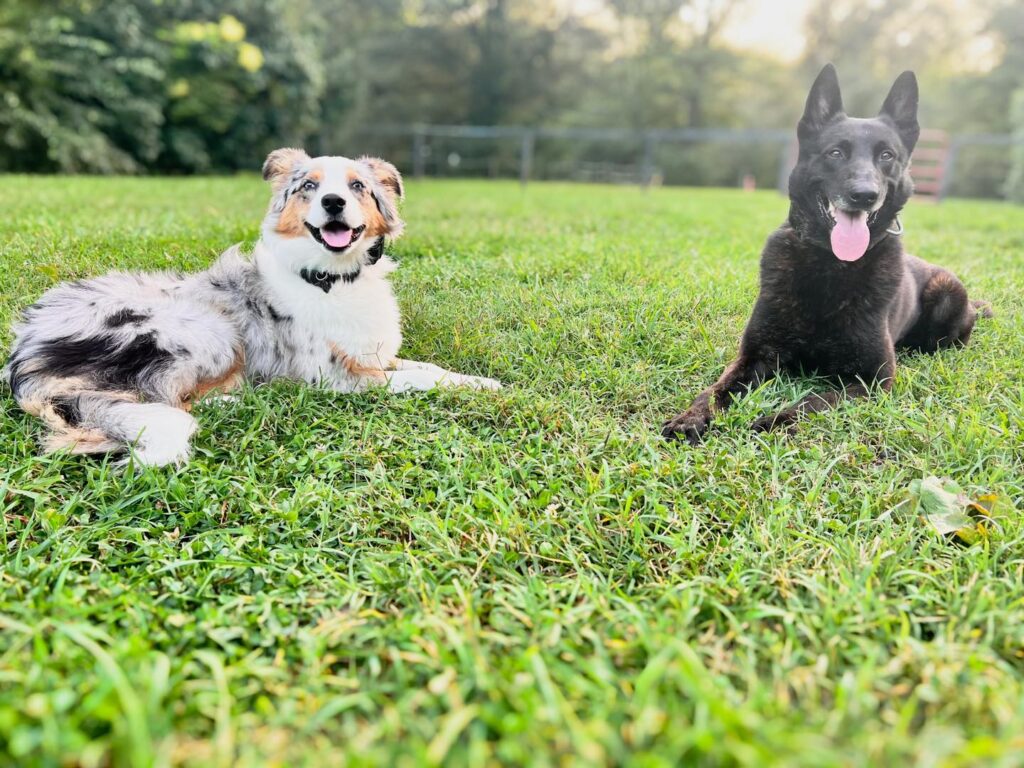
Yes, some herding dogs make good companions in households that meet their needs. Breed background is useful, but it cannot guarantee compatibility with children, visitors, or other animals.
Consider your actual routine:
Meeting adult dogs can be more informative than watching a polished highlight video. Discuss everyday behavior, recovery after excitement, and comfort around the situations your household regularly encounters.
Some dogs with herding backgrounds may follow movement closely, circle, chase, bark, or attempt to direct people and animals. These behaviors vary, and they should not automatically be labeled as harmless herding.
A dog that chases children or nips at another pet needs management and an appropriate training plan. Breed heritage does not make unwanted contact acceptable.
Daily life should include opportunities for activity and engagement as well as learning to rest. Constant entertainment is not the same as a sustainable household routine.

Useful goals can include responding when called, walking with attention, waiting at doors, and settling in a designated place. The starting point should reflect the dog’s current skills and the situations the owner needs to manage.
For owners in Woodbridge and Northern Virginia, dog obedience training provides information about available lesson and Board & Train formats. Ordinary obedience training and specialist livestock-herding instruction are different services.
You can also contact the training team to discuss your dog’s history and household goals.
Examples include Border Collies, Australian Shepherds, Australian Cattle Dogs, German Shepherds, Belgian Malinois, Shetland Sheepdogs, both Welsh Corgi breeds, Collies, Miniature American Shepherds, Old English Sheepdogs, and Bearded Collies. This article is a selection, not a complete list.
No. The group includes smaller breeds such as Corgis and Shetland Sheepdogs as well as larger dogs. Size alone does not establish how much activity or training an individual will need.
Yes. The German Shepherd Dog belongs to the AKC Herding Group, even though the breed is also associated with other working roles.
Not necessarily. Many live as companions. Their suitability depends on the individual dog and whether the household can meet its activity, engagement, training, and care needs.
There is no single answer for every household. Compare adult temperament, activity, grooming, and the support available from a reputable breeder or rescue. A smaller dog or an intelligent breed is not automatically easier to live with.