
Calm routines, short absences, and obedience skills like sit, down, stay, place, and recall can support clearer communication and calmer routines, but true separation anxiety usually requires gradual alone-time practice and, in severe cases, veterinary or behavior support.
Crate training a dog with separation anxiety can be helpful, but only when it is done carefully. Many anxious dogs struggle when left alone, and their behavior can look like destruction, howling, barking, or frantic attempts to escape.
This guide explains the telltale signs of dog separation anxiety, why some dogs panic, how to begin crate training safely, and when professional dog training can make a big difference.
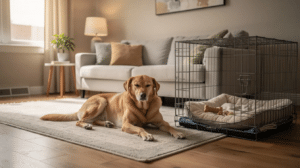
Separation anxiety in dogs is more than a pup whining because you walked into another room. True separation anxiety escalates after the owner leaves and can put the dog under serious stress.
Watch for these signs:
Separation anxiety can affect any dog, including puppies, older dogs, rescue dogs, and dogs from stable homes. Some dogs may be more sensitive to changes in routine, attachment, or time alone, but breed alone does not confirm the problem. Other dogs in the house do not always fix separation anxiety because the distress is often connected to being separated from a specific person.
A simple camera can help you compare stress levels when your dog is loose, behind a baby gate, or in a crate. Brief protest may fade quickly. True separation anxiety usually builds into panic.
Crate training a dog with separation anxiety takes time because the crate can either become a safe den or a trigger. The difference is how the training is introduced.
Some anxious dogs also have confinement anxiety. That means the dog may feel trapped in a small space, even if the owner is home. Closing the crate door too quickly can make the dog’s anxiety worse.
Crate training can take weeks to months for anxious dogs, depending on the dog’s stress level, history, and response to training. Desensitization works best when exposure is gradual and the dog stays below the point of panic.
Key reasons to go slowly:
If the crate is currently scary, the first step is not shutting the dog inside. The first step is changing how the dog feels about the crate.
To help a dog with separation anxiety feel comfortable in a crate you must transform the crate into a safe haven. A crate should feel like a safe den, never a jail cell.
Use this gradual process:
Never use the crate as a form of punishment. Do not send the dog to the crate after misbehavior, scolding, or frustration. That links the crate to fear and owner anger.
For some dogs, calming aids such as pheromone diffusers, white noise, soft music, or veterinarian-recommended products may help support the training plan. Ask a veterinarian before using supplements or medication, especially if the anxiety is severe, sudden, or paired with other health concerns. Calming aids can support training, but they do not replace gradual behavior work.

A calm routine helps lower anxiety before it spikes. Keeping exits and arrivals low-key prevents immediate buildup of anxiety.
Try these habits:
Desensitization can help reduce crate anxiety over time. The time spent on easy repetitions is not wasted. It teaches the dog that departure cues do not always mean panic.
Avoid jumping from early stages to a full workday. That is one of the fastest ways to undo progress with a dog that has separation anxiety.
Longer is not better for anxious dogs. If a dog with separation anxiety is forced into a durable crate before it feels safe, the dog may experience the crate as a trap.
Common risks include:
If long absences are unavoidable, consider a pet sitter, dog walker, family member, or supervised safe area. Some dogs do better in a dog-proofed room or x pen while crate training continues separately.
Use video to see whether your dog stays calm or moves into panic. This helps you know whether the current duration is still safe.
Dog obedience gives anxious dogs structure and clearer communication. Skills like place, sit, down, stay, and recall can support calmer routines, but obedience alone does not cure true separation anxiety. The main goal is to combine structure with gradual alone-time practice, calm routines, and professional or veterinary support when needed.
Helpful skills include:
Confident obedience around the house helps most dogs feel more secure. It also helps owners give clear direction instead of reacting emotionally when the dog is feeling anxious.

Professional dog training can help when home strategies are not enough, and reviewing available training program options can help owners choose the right next step. A qualified trainer can observe patterns, improve structure, and help build a safer plan for crate training and alone-time practice. A veterinarian or veterinary behavior professional should also be involved when anxiety is severe, sudden, includes self-injury, or does not improve with careful training.
Seek guidance if you see:
In some cases, medical support and behavior modification work together. Separation-related problems need patience, structure, careful management, and gradual behavior work rather than punishment.
Crate training a dog with separation anxiety is possible, but it must be gradual. The goal is not to force the dog to “get over it.” The goal is to teach the crate as a calm, predictable, safe space.
Separation anxiety in dogs improves with calm routines, short absences, clear boundaries, and consistent obedience. Many dogs can learn to relax when alone, but every dog moves at a different pace.
Celebrate small wins. A quiet few seconds with the door closed can become a few calm minutes, then longer sessions, when the training stays fair and consistent.
Professional guidance can help owners create a safer, more realistic plan based on the dog’s stress level, crate response, and daily routine. professional guidance. Expert support can help create a tailored plan that suits your dog’s unique needs, leading to calmer behavior and a happier home.
These answers cover common questions about crate training, anxious dogs, and separation anxiety timelines.
Mild cases may improve over several weeks with consistent training, while moderate to severe dog separation anxiety can take much longer. Every dog moves at a different pace. Keep a simple log of calm crate time, departure practice, and stress signals so you can track small improvements without rushing the process.
Many dogs can learn to relax in a crate, but not every dog should be rushed into one. Dogs with intense confinement anxiety may do better with a larger safe space, such as a gated room or x pen, while training continues.
Calming aids may help take the edge off, especially pheromone diffusers, soft music, white noise, or veterinarian-recommended products. They should support positive reinforcement, not replace gradual crate training, calm routines, and professional guidance when needed.
Some dogs are calmer loose in a dog-proofed area, while others feel safer in a properly introduced crate. Use video to compare stress levels and choose the setup that keeps your dog safest.
Use help from family members, a trusted pet sitter, or a dog walker to break up the day. If your dog cannot stay calm yet, do not force long crate sessions. Build tolerance slowly with professional help when needed.