
If you are wondering how long does it take to toilet train a puppy, the honest answer is that it depends on age, routine, supervision, and consistency. The good news is that most puppies improve quickly once they understand when and where to potty.
This guide explains realistic toilet training timelines, why accidents happen, how crate training helps, and when professional puppy training may make the process easier.
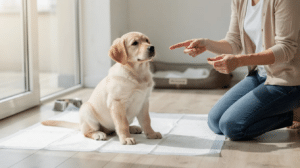
So, how long does it take to toilet train a puppy? As a general rule, many puppies show basic improvement within a few weeks, become mostly reliable around 4 to 6 months, and may need several months more to become fully potty trained.
Mostly reliable means your puppy has fewer daytime accidents, eliminates outside when supervised, and begins showing signs before needing the bathroom. Fully house trained means your puppy consistently eliminates in the correct place under a reasonable bathroom schedule. Even a well-trained puppy may need closer supervision and reminders in a new home or unfamiliar environment.
Age matters because bladder and bowel control develop gradually. Very young puppies, especially those under about 16 weeks, cannot be expected to hold it for long. They may need to go outside every 30 to 60 minutes while awake, as well as immediately after waking, eating, drinking, exercise, and play. As your puppy matures and has fewer accidents, gradually extend the time between breaks.
Toy and small breeds generally have smaller bladders and higher metabolisms, so smaller breeds may require more frequent potty breaks. Larger puppies may physically hold it longer, but they still need clear training. Slow progress usually does not mean a stubborn puppy. It often means the routine, supervision, or timing needs adjustment.
Every puppy has a different house training timeline. The biggest factors are age, health, breed size, routine, supervision, crate habits, consistency, accidents, and old habits from past experiences.
A strict feeding schedule supports toilet training success because puppies thrive on predictability which makes their elimination patterns predictable. Puppies thrive on routine and consistent timing, and taking your puppy out at the same times accelerates the learning process. Establishing a routine helps puppies learn where to go.
Supervision is essential to prevent potty training setbacks. Not supervising your puppy can result in indoor accidents, especially if the puppy has too much space too soon. Do not leave every door open or allow the puppy to wander the whole house. Use a defined space, watch closely, and catch early signs like sniffing, restlessness, circling, whining, barking, heading toward the door, or returning to a previously soiled area.
Crate habits also matter. Crate training can support toilet training by creating a predictable schedule and reducing unsupervised accidents. Because many puppies prefer not to soil their sleeping area, a properly sized crate can help them wait briefly for the next scheduled bathroom break. The crate should allow your puppy to stand, turn around, and lie down comfortably, and it should never replace frequent potty opportunities.
Health and stress can delay progress. Contact your veterinarian if your puppy suddenly begins having frequent accidents, strains to urinate or defecate, urinates unusually often, drinks much more than normal, develops diarrhea, or regresses after doing well. Urinary problems, digestive illness, parasites, medication, anxiety, and other medical conditions may affect toilet habits.

The fastest way to train a puppy is to make the day predictable. Use the same spot outside, the same cue, the same reward timing, and a realistic break schedule.
Start with this simple routine:
Use a leash and walk to one designated potty spot. Using a designated potty spot helps puppies associate the smell with going to the bathroom. Keep the trip boring until your puppy goes. Say a simple cue like “go potty” or “toilet time.” After the puppy finishes, praise and give a small treat immediately.
Timing matters. Immediate rewards for eliminating outside strengthen the association with the behavior. Reward immediately within one or two seconds after the puppy finishes, not after you return inside. Positive reinforcement encourages desired potty behaviors, and it teaches the puppy exactly what earned the reward.
For working owners, plan ahead. If business hours keep you away, arrange a dog walker, neighbor, sitter, or family member for midday potty breaks. Frequent breaks are crucial during toilet training for young puppies.
Many toilet training problems come from a few predictable mistakes. The good news is that most are easy to correct with patience and consistency.
Do not punish accidents. Punishment can make your puppy fearful or teach them to hide when they need to eliminate. If you catch your puppy starting indoors, interrupt calmly and take them to the correct location. If you discover the accident later, clean it without scolding because your puppy will not connect a delayed reaction with the earlier behavior.
Waiting too long between breaks is another common issue. Ignoring signs your puppy needs to go leads to more accidents. Puppies may sniff the floor when they need to go. Restlessness can indicate a puppy needs to potty. Circling is a common sign that a puppy needs to go outside. Puppies may go to a previously soiled area when they need to potty. Barking can signal that a puppy needs to go outside.
Do not give more freedom too early. A puppy that roams the house can sneak away, have accidents, and build old habits. Keep the puppy near you, in a defined space, or resting in the crate between supervised breaks.
Be careful with pads. Puppy pads and potty pads can help in apartments, severe weather, or temporary situations, but using puppy pads can confuse your puppy during training if your long-term goal is outdoor-only potty. Inconsistency in routine prolongs the potty training process, especially if the puppy is sometimes rewarded indoors and sometimes outdoors.
Clean accidents thoroughly with a pet-safe enzymatic cleaner. These products break down urine or fecal residue that ordinary household cleaners may leave behind, reducing lingering odors that can encourage a puppy to revisit the same area. Follow the product instructions and test it on a small area before treating carpet or upholstery.

How long does it take to toilet train a puppy? For most puppies, expect visible improvement within a few weeks, better reliability by 4 to 6 months, and full reliability closer to 8 to 12 months for some pups.
Success does not happen overnight. It comes from frequent supervised potty breaks, a clear routine, calm crate training, quick praise, and consistent rewards outside. Expect several accidents during the first few months of training, and remember that progress is rarely a straight line.
If you find toilet training challenging, professional puppy training can provide valuable guidance. Expert support can help you establish effective potty routines, improve crate habits, reduce accidents, and encourage calmer daily behavior, making the process smoother for both you and your puppy.
A puppy can learn the basic routine in about 7 days, such as where the potty spot is and that outside earns praise. True reliability usually takes several weeks to several months.
Potty pads may help in high-rise apartments, storms, or situations where outdoor access is limited. If your goal is outdoor toilet training, have a plan to move pads closer to the door, then outside, so the puppy does not stay confused.
Take your puppy out right before bed, keep the crate near your bedroom, and make night trips quiet. Keep lights low, avoid play, and return the puppy to sleeping after the bathroom break.
First, schedule a vet check to rule out medical causes. Then return to basics for a week or more: closer supervision, shorter time between potty breaks, crate use, and rewards for every outdoor success.
Contact a veterinarian sooner if accidents increase suddenly, your puppy strains, urinates unusually often, drinks more than normal, has diarrhea, or appears unwell. If an otherwise healthy puppy is not making steady progress by about 4 to 6 months of age, ask your veterinarian and a qualified trainer to review the schedule, supervision, crate routine, and reinforcement process.