
Jumping on people is one of the most common dog behavior concerns, and many dogs jump because the behavior has been rewarded with attention over time.
The good news is that jumping is not a personality flaw. It is a learned habit that can be replaced with a calm, alternative greeting behavior that works at home and in public. With practice and consistency, most dogs can learn to greet politely through clear rules, calm handling, and consistent reinforcement.
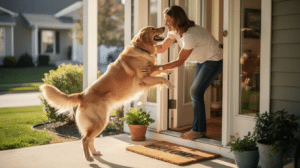
Dogs often jump to connect with humans, reach attention quickly, or respond to excitement during greetings. Puppies may also use jumping, licking, and body movement as social behaviors. As dogs grow, the behavior can stick because it keeps working.
Common motives include excitement when owners come home, anticipation of play, seeking touch or eye contact, and habit carried over from puppyhood. Many dogs jump because it leads to some kind of response, and they may not understand the difference between praise, scolding, pushing away, or other forms of attention.
Here is why jumping becomes a habit: dogs learn that jumping gets them attention, even if that attention is negative. When people talk, laugh, reach down, or push a dog away, the dog may still read the response as interaction. Research and professional behavior guidance support the idea that jumping during greetings is common, especially in exciting situations like an owner returning home.
Dogs repeat behaviors that earn interaction. If jumping leads to talking, touching, pushing, or eye contact, the behavior can become stronger over time. that has been reinforced over time. Understanding this motivation helps you feel more patient and sets the stage for teaching calmer greeting behavior.
Certain daily situations make dogs jump more often and more intensely. Recognizing these triggers is the first step toward changing the pattern.
Common triggers include:
Touching, pushing away, grabbing collars, or talking loudly can accidentally reward jumping behavior instead of stopping it. Even yelling “off” or “no” provides attention, and jumping can be reinforced by negative attention like yelling. Dogs learn that jumping is a reliable way to get a reaction, regardless of whether that reaction is praise or frustration.
Excited dogs often lack impulse control, which leads to more jumping. To prevent jumping from getting stronger, you need to remove the reward entirely and stop letting the dog practice the habit. If one person allows it while another does not, mixed rules teach the dog that jumping sometimes works, making the behavior worse over time.
The key to understanding how to train a dog to stop jumping on people is simple: replace jumping with a clear job. Teaching an alternative greeting gives the dog something specific to do instead of launching at every person who walks through the door.
This works through incompatible behaviors. A dog cannot sit and jump at the same time. Common alternatives include:
The “sit to greet” plan works like this:
The goal is to show dogs that four paws on the floor gets attention. You can also toss treats on the floor to encourage the dog to stay down, keeping their head low and their feet on the ground.
Consistency matters more than anything. Dog Training should be reinforced by applying the same rules across all family members, visitors, and everyday routines. If one person lets the pup jump while another does not, progress stalls.

Solid obedience gives the dog structure and impulse control for polite greetings. These are the core skills that support alternative greetings and prevent jumping in real-life settings.
Start with short, frequent training sessions in quiet environments. Five to ten minutes, two to three times per day, builds skills before you add distractions. End each session on a success to keep confidence high for both you and your dog.
Dogs need rehearsal in real-life situations to stop jumping on guests and strangers. Training in a quiet living room is a great start, but it must extend to the places where jumping actually happens.
Follow this step-by-step progression:
Use high-value treats or calm praise for successful greetings. You can also scatter treats on the ground to keep the dog’s feet planted and head low. Removing attention for jumping and rewarding calm behavior helps dogs learn that polite greetings earn interaction, not leaping.
Keep sessions short, end on a win, and gradually increase difficulty by adding excitement, movement, and new environments. With consistent practice, many dogs can learn to sit or keep four paws on the floor when greeting people.

Some dogs need more structure, especially strong, jumpy, or highly excitable pets. If your dog knocks people over, continues jumping after weeks of consistent practice, or you feel overwhelmed, it may be time to get help.
Signs that professional support is useful:
Professional dog training can provide custom behavior plans, hands-on coaching, and neutral helpers to practice calm greetings safely. Programs focused on obedience, impulse control, and place work can be especially helpful for dogs that love to jump on people. Research using functional behavior assessment supports the idea that identifying what reinforces the jumping behavior can help create a more effective training plan.
Consider professional support if you want more guidance or more reliable behavior in busy environments. Consistency is vital in dog training to eliminate jumping behavior, and a professional can help every person in your household stay on the same page.
Jumping is a learned habit, not a character flaw. With patience, structure, and consistency across all family members, most dogs can learn polite greetings that work at home, at the front door, and out in the world.
Now that you know how to train a dog to stop jumping on people, the next step is putting these strategies into daily practice. Consistently reward calm behavior and maintain clear expectations for everyone your dog meets.
If you need support with dog jumping, obedience training, impulse control, or creating calmer greetings around guests and distractions, consider consulting a professional trainer who can help guide you and your dog toward lasting success.
Dogs of any age can learn new greeting behavior. An older dog may have years of practice behind the habit, so it can take longer to change, but it is absolutely possible. Start with simple exercises like sit for attention and place near the door, keeping sessions short to match your dog’s physical needs. Consistency and clear rules matter more than age when changing jumping habits.
Keep the dog on a leash or behind a gate around small children until calm greetings are reliable. Practice sit or place while adults approach first, then add older children who can follow instructions, and finally younger kids with close supervision. Safety comes first. Adults should manage the dog with a leash, gate, or distance around children until calm greetings are reliable. Children should avoid hugging, squealing, or rough play during greetings.
Many dogs show improvement within a few weeks of consistent practice, but full reliability depends on the dog’s history, excitement level, household consistency, and training environment of daily practice. Full reliability around big distractions, like busy parks or crowded doorways, can take longer. Factors like the dog’s energy level, past reinforcement history, and how consistent the household is will affect the timeline. Track small wins, such as one calm greeting at the front door each day, to stay motivated.
A cue like “off” can be useful only after the dog clearly understands which behavior earns rewards, such as sitting or keeping four paws on the floor. Avoid repeated shouting. Instead, calmly remove attention when the dog jumps and immediately reward the chosen alternative behavior. Over time, the dog will respond more to the positive reinforcement pattern of sit-to-greet than to repeated corrections.
Mixed rules slow progress because the dog learns jumping sometimes works and sometimes does not. Hold a family meeting to agree on one simple greeting rule, like “the dog must sit before anyone pets or talks to them.” Many dogs only need one consistent standard applied by everyone. Assign one adult to lead training and teach guests how to greet politely so the dog gets the same message from every person.