
Nearly half of adult dogs display at least one problematic behavior, making retraining a common challenge for many owners. How did these undesirable habits develop, and more importantly, how can they be effectively addressed? Consider the story of Max, a rescue dog whose incessant barking was transformed through consistent conditioning and positive reinforcement.
Dog behaviorists understand the multifaceted nature of retraining, often tracing bad habits back to the dog’s early life experiences. According to recent studies, roughly 67% of adult dogs can be retrained with structured schedules and proper techniques. Incorporating a mix of patience, vigilance, and tailored strategies provides the foundation for successful behavioral change, demonstrating significant improvement in the dog’s conduct.

Re-training adult dogs with bad habits begins with identifying what specific behaviors need improvement. Is your dog barking excessively, pulling on the leash, or showing aggression towards other dogs? Pinpointing these habits is crucial for a targeted approach, allowing the owner to focus on rectifying one issue at a time.
Understanding why your dog exhibits these bad habits is the next critical step. Often, these behaviors stem from past experiences or a lack of proper training during puppyhood. Exploring the root causes can help in selecting the most effective techniques to address and correct the undesired actions.
Setting clear and achievable training goals is essential for progress. Break down the desired outcomes into small, manageable steps, such as teaching your dog to sit quietly when guests arrive. These incremental goals make the training process less overwhelming for both the dog and the owner.
Consistency and patience play pivotal roles in re-training adult dogs. Positive reinforcement techniques, such as treats and praise, should be used to reward good behavior. Regular practice and maintaining a calm demeanor can lead to lasting changes and a happier, well-behaved pet.
Determining exactly which bad habits your adult dog has is the first step in re-training. Whether your dog constantly jumps on guests or has a habit of chewing furniture, pinpointing these behaviors is essential. Knowing the specific issues helps tailor the training approach effectively.
Take note of when and where these bad habits occur most frequently. Does your dog bark excessively when left alone or become aggressive during walks? Observing the patterns in behavior provides clues to underlying triggers, which can be addressed during training sessions.
Creating a list of these problematic behaviors can be helpful. This will ensure that you don’t overlook any issues and can systematically work on each problem. Use observations to categorize habits based on their frequency and severity.
Once identified, you can begin to focus on each bad habit individually. This method allows for a more structured and manageable training process. For example, if your dog pulls on the leash, start with leash training before addressing other behaviors.
Understanding why your dog has developed certain bad habits is crucial for effective retraining. These behaviors could stem from past traumas, lack of proper training, or even boredom. Knowing the root causes helps in selecting the most appropriate training methods to address them.
Some dogs might exhibit bad habits due to anxiety or stress. For example, excessive barking or destructive chewing can often be linked to separation anxiety. Identifying these emotional triggers allows for more focused and empathetic training techniques.
Environmental factors can also play a significant role in shaping your dog’s habits. Changes in the household, such as moving to a new home or the addition of a new pet, can impact behavior. Recognizing these factors helps in creating a more stable environment for retraining.
Consult with a veterinarian or a professional dog trainer to gain insights into the causes behind your dog’s behavior. Their expertise can provide valuable perspectives and solutions. Utilizing their guidance can make the retraining process more efficient and successful.
When re-training an adult dog, setting clear and achievable goals is essential. This starts with breaking down desired behaviors into manageable steps. Instead of expecting immediate perfection, focus on gradual improvements.
For example, if the goal is to reduce barking, begin by rewarding moments of quiet. Gradually increase expectations as your dog shows progress. This method helps keep both you and your dog motivated.
Make sure your training goals are realistic and tailored to your dog’s needs. Adjust goals based on your dog’s learning pace and capabilities. Flexibility is key to ensuring successful training.
Consistency in your approach plays a pivotal role in achieving these goals. Regular sessions and patience are vital. Over time, consistent reinforcement can lead to lasting positive behaviors.
Consider creating a chart to track progress. BehaviorGoalProgressBarkingQuiet for 1 minuteAchievedLeash pullingWalk beside you for 5 minutesIn progress Monitoring these improvements can provide a clear picture of your dog’s development.
Incorporating varied training techniques ensures a well-rounded approach.
Using these methods can enhance your dog’s learning experience.
Positive reinforcement is a powerful tool in training adult dogs. It involves rewarding good behavior, encouraging your dog to repeat these actions. Treats, praise, and playtime can all serve as effective rewards.
Start by identifying which rewards motivate your dog the most. Some dogs respond best to treats, while others prefer praise or toys.
Tailoring rewards to your dog’s preferences boosts the effectiveness of positive reinforcement.
Timing is crucial in using positive reinforcement. Offer rewards immediately after your dog performs the desired behavior. This helps them make the connection between the action and the reward.
Consistency in rewarding good behavior reinforces the learning process. BehaviorRewardSitting on commandTreatsWalking calmly beside youPraise Continuously reinforcing positive actions encourages your dog to adopt new habits permanently.
Avoid punishing bad behavior, as this can lead to fear and confusion. Instead, focus on rewarding positive actions to guide your dog towards better behavior. Patience and persistence are key to successful positive reinforcement training.
Incorporate regular training sessions into your routine. Keep sessions short and engaging to maintain your dog’s interest. Over time, these consistent efforts will lead to noticeable improvements in their behavior.
Consistency and patience are vital in re-training an adult dog. Regular training sessions help reinforce learned behaviors. The more consistent you are, the quicker your dog will understand what is expected.
Create a daily routine that includes training times. Whether it’s morning or evening, stick to this schedule to avoid confusion.
This routine helps establish a clear structure for your dog.
Maintaining patience is equally important. Dogs, like humans, learn at their own pace. Rushing or showing frustration can hinder progress.
Celebrate small victories to keep morale high. Even minor improvements are steps in the right direction. Behavior ChangeRewardReduced barkingTreatsSitting on commandPraise Acknowledging these wins motivates both you and your dog.
Stay calm and composed during training sessions. A positive environment fosters better learning. Over time, your consistent efforts and patience will yield significant behavioral changes in your dog.
Review progress regularly and adjust techniques as needed. Flexibility in your methods ensures the best results. By being consistent and patient, you’ll create a foundation for lasting positive habits.
Having the right tools and resources is crucial for effective dog training. These items aid in reinforcing positive behavior and addressing bad habits. Some tools are designed specifically for obedience training.
Collars, leashes, and harnesses are basic yet essential training equipment.
Choosing the appropriate gear depends on your dog’s size and behavior.
Treats serve as excellent motivators during training sessions. Healthy options ensure your dog stays fit while learning new behaviors. Treat TypeDescriptionSoft treatsEasily digestibleCrunchy treatsA fun reward Rewarding with treats encourages repetition of good habits.
Toys play a significant role in keeping your dog engaged. Interactive toys can be used to reinforce commands during playtime. This method keeps training enjoyable and less monotonous.
A clicker is another useful tool that helps in marking desired behaviors instantly. The sound signals completion of a command, followed by a reward. Clicker training can be highly effective when used consistently.
Diverse resources such as books, online courses, and professional trainers provide additional support. These resources offer valuable insights into dog behavior and best practices for training.
Re-training adult dogs presents several challenges. One major obstacle is breaking deeply ingrained habits. Older dogs often have established behaviors making it harder to introduce new ones.
Lack of patience can hinder progress significantly. Training requires time, and rushing can confuse the dog. Focus on small, consistent steps to gradually build new habits.
Resistance to change is another common issue. Dogs may be set in their ways and resistant to new routines. Overcoming this requires a balance of firm guidance and positive reinforcement.
Behavioral issues such as aggression or anxiety can complicate training.
Addressing these issues first can create a more conducive environment for training.
Environmental disruptions, such as frequent changes in the household, can affect training consistency. Establishing a stable and predictable environment can aid in minimizing these disruptions.
Utilizing professional help can provide solutions to complex challenges. Professional trainers offer specialized expertise and techniques. Collaborating with experts can significantly improve training outcomes.
Real-life transformations in dog behavior can be truly inspiring. Take the case of Buddy, a dog who used to fear strangers. Through consistent positive reinforcement, Buddy now greets new people with confidence.
Another success story is about Bella, who had destructive chewing habits. By using engaging toys and providing alternative chews, Bella’s owners guided her away from chewing furniture. Old HabitNew BehaviorChewing on furniturePlaying with toysBarking at doorbellSitting calmly These changes led to a more harmonious household.
Max, a rescue dog, showed signs of aggression towards other dogs. With regular socialization sessions and behavioral training, Max became more relaxed and less aggressive. His transformation highlights the impact of patience and consistent training.
Re-training Charly to not pull on the leash took diligent effort. Using a combination of treats and a new harness, Charly’s owners turned walk time into enjoyable and controlled outings.
This success brought relief and pleasure to both Charly and his owners.
Finally, there’s Rocky, who had severe separation anxiety. Implementing gradual absences and positive reinforcement, Rocky’s anxiety lessened considerably. His improved behavior demonstrates the effectiveness of structured training.
Maintaining your dog’s training over time ensures lasting positive behaviors. Regular practice sessions help keep skills sharp. Consistency is key in preserving learned commands.
Engaging in continuing education for your dog offers new challenges and learning opportunities. Advanced training classes or online courses can be beneficial.
These activities stimulate your dog mentally and physically.
Incorporate training into daily routines to reinforce behaviors. ScenarioTraining ActivityMealtimePractice “sit” and “stay”WalksWork on leash manners Consistent reinforcement during ordinary activities helps maintain discipline.
A periodic review of previous training ensures that your dog doesn’t forget important commands. Revisiting basic commands like “sit,” “stay,” and “come” maintains their proficiency. Use short, frequent sessions for best results.
Engage your dog with new tricks to keep training exciting. Teaching new skills can prevent boredom and encourage enthusiasm. Simple tricks like “shake,” “roll over,” and “play dead” are enjoyable challenges.
Professional trainers can occasionally assess your dog’s progress. They provide valuable feedback and tailor new training plans. Their expertise supports ongoing success in your dog’s behavior maintenance.
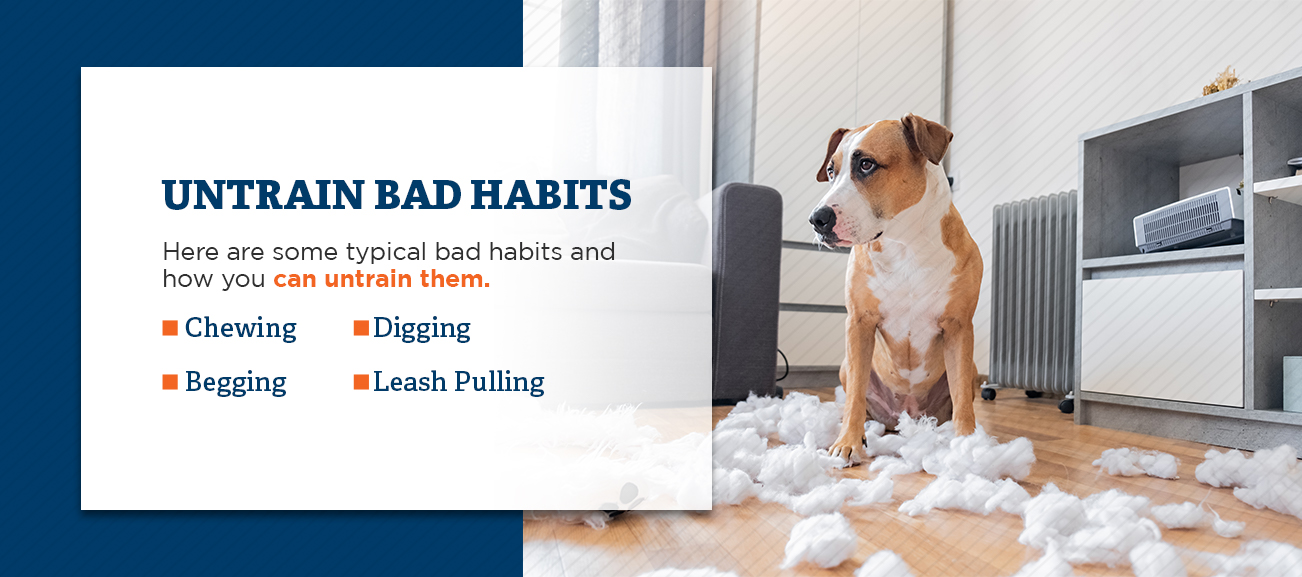
Re-training adult dogs with bad habits can be challenging yet rewarding. Here, we address some common questions to help you navigate the process.
Adult dogs can develop bad habits due to a variety of reasons. These may include a lack of early training, past trauma, or changes in their environment. Understanding the root cause is crucial for addressing and correcting these behaviors effectively.
For instance, a dog that wasn’t socialized as a puppy might become aggressive toward other dogs. Identifying such underlying issues helps in choosing the right approach for retraining. This makes the process more focused and efficient.
Consistency is perhaps the most crucial element in any training regimen. Regular practice reinforces the behaviors you’re trying to instill, making it easier for your dog to understand and follow commands. Inconsistent training can confuse your dog, making it harder to establish good habits.
For example, if you’re trying to curb barking, you should consistently reward quiet behavior. The more you stick to this routine, the quicker your dog will learn. Consistency helps in making the new behavior second nature to your pet.
Positive reinforcement involves rewarding good behavior to encourage its repetition. Treats, verbal praise, and playtime are all excellent forms of positive reinforcement. Consistent rewards help the dog understand that good behavior leads to positive outcomes.
Timing is critical when using positive reinforcement. The reward should immediately follow the desired behavior to create a clear association. This technique is effective for a wide range of behaviors, from sitting on command to walking calmly on a leash.
Yes, professional trainers can offer valuable assistance in retraining adult dogs. They bring expertise and experience that can be critical in addressing complex behavioral issues. A professional can quickly identify the root causes and suggest effective training methods.
Trainers also offer the benefit of an objective perspective, which can be helpful for owners who might be too emotionally involved. Regular sessions with a professional can accelerate the retraining process, making it more effective and less stressful for both you and your dog.
Various tools can aid in retraining adult dogs. These include items like clickers, harnesses, and treat pouches. Clickers, for example, are used to mark desired behaviors precisely, followed by a reward.
Harnesses can help control dogs that tend to pull on the leash, making walks more manageable. Treat pouches keep rewards easily accessible, ensuring you can quickly reinforce good behavior. Using the right tools can simplify the training process significantly.
Re-training adult dogs with bad habits requires patience, consistency, and the right tools. Understanding the root causes allows for effective strategies tailored to each dog’s needs. The journey may be challenging, but the rewards are worthwhile.
Positive reinforcement and professional help can significantly improve the process. Continued education and maintenance ensure lasting behavioral changes. With dedication and the right approach, any dog can learn new, positive behaviors.