Training a dog to walk on leash without pulling makes daily dog walks calmer, safer, and more enjoyable. It also gives your dog a clear sense of what to do when the leash is attached, and the world gets exciting.
Leash training is not a quick fix. It is a skill built through structure, timing, patience, and clear communication. Loose leash walking means your dog can walk near you with the leash loose instead of tight, while still having moments to sniff, explore, and have fun.

Understanding why a dog pulls is the first step to stop leash pulling. Most dogs are not being bad. They simply have not been taught what leash walking should feel like.
Dogs walk faster than humans and often pull to reach interesting smells, people, food, traffic, wildlife, or other dogs. In one shelter study, One shelter-dog study found that leash pulling was common during walks, but results may not represent all pet dogs.
Pulling also becomes a learned habit. If the dog pulls and still gets to start walking toward the smell, person, or park, the dog learns that pulling works. Over time, every walk can reinforce the same pattern.
Lack of structure can make owners frustrated too. If the rules change from day to day, the dog starts guessing. Clear leash manners matter because they teach your dog when to move, when to wait, and how to stay close.
Training dog to walk on leash without pulling starts with the dog’s attention. If your dog cannot offer eye contact in the house or yard, she’s unlikely to focus beside traffic, joggers, or other dogs.
Start training in low-distraction environments like homes to reinforce leash manners. Say your dog’s name in a calm voice. When your dog looks at you, use a verbal marker like “Yes!” or a clicker, then give a treat. Reward your dog for eye contact during walks too.
Use a verbal cue like “Watch” to redirect attention when distractions appear. Teaching loose leash walking this way helps your dog check in before the leash gets tight. Teach your puppy to check in with you at the end of the leash, even if your puppy is not fully vaccinated and you are only practicing inside.
Keep sessions short. Practice short training sessions of 5 to 15 minutes. Training walks differ from exercise walks and should be kept brief to avoid fatigue. For high-energy dogs, light exercise before training can improve focus.
Focus work becomes useful when it is connected to simple walking rules. The key is consistency: the dog moves forward when the leash is slack, and the walk pauses when the leash tightens.
Use a 6-foot leash for better control during training. Avoid using retractable leashes for training sessions because they reward distance and make leash tension unclear. A well-fitted flat collar may work for some dogs, while a properly fitted harness can be a gentler option for puppies or dogs that put pressure on their neck.
A front clip harness can help redirect a dog’s pulling behavior and may be a better option for many owners. A properly fitted harness helps reduce slipping, while a poor fit may rub, restrict movement, or allow the dog to back out. Head halters can provide more control for strong dogs, but they should be introduced slowly with gentle handling and rewards. Training tools should not replace leash training, and aversive tools can create stress or injury when used incorrectly.
Try this routine:
The “red light, green light” game is one of the simplest methods. When the dog pulls, stop. When the dog returns to your side or creates a loose leash, continue walking. You can also change direction when your dog pulls to regain focus. Abruptly changing direction during a walk teaches the dog to pay attention to their handler, and changing direction toward the opposite direction can prevent rehearsing pulling.
Avoid yanking, dragging, or repeating commands over and over. If you constantly say “heel, heel, heel,” the word loses meaning. Use one clear cue, then guide with movement, reward, and calm control.
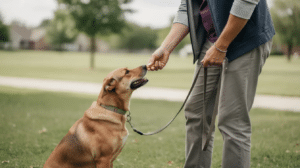
Strong dog obedience makes leash walking easier because your dog already understands how to follow directions. These skills support impulse control and help your dog walk nicely when the environment changes.
Useful skills include:
A loose heel helps your dog stay close while the leash remains elaxed. In the early stages, frequent rewards help your dog understand that walking near you is worth repeating. Reward-based techniques can improve leash manners because they show the dog what earns movement, food, praise, and access to sniffing.
Practice in the yard, hallway, driveway, or quiet sidewalk before busy parks. Use treats to reward focus and calm choices around distractions, but do not force your dog too close too soon. If your dog starts pulling, barking, or fixating, create more distance and rebuild focus before moving closer again. Practice short training sessions of 5 to 15 minutes so your dog stays engaged.
Distractions are often the hardest part of leash training. Smells, cars, kids, bikes, and other dogs can cause pulling, barking, or lunging.
Begin far enough away that your dog can still think. If your dog starts to stare, pull, bark, or fixate, create space. Move calmly, reset focus, and only go closer when your dog can respond.
Practice engagement games in parking lots, open fields, and quiet sidewalks before dog-heavy trails. Reward your dog for looking back at you instead of pulling. Use treats, praise, play, and your voice to encourage the behavior you want to see again.
Progress comes in small steps. Watch your dog for a sign of stress, such as stiff posture, heavy panting, or frantic scanning. If the walk feels too hard, reduce the challenge and rebuild confidence.
Some leash issues need more than basic tips or videos. Professional dog training can help if your dog drags the handler, reacts toward other dogs or people, or shows anxiety that makes walks stressful.
A trainer can teach clearer timing, better leash handling, impulse control, recall, and distraction-proof obedience. This is especially helpful when pulling is tied to reactivity, fear, or long-standing habits.
Asking for help is not failure. It is a practical step to protect both the dog and the handler while building safer loose leash walking.
Training a dog to walk on a leash without pulling is a process built on focus, structure, and follow-through. Your dog needs to learn that leash tension stops the walk, while a loose leash opens the door to movement, sniff time, reward, and praise.
Calm routines turn daily walks into practice instead of battles. Even if your dog has pulled for years, steady leash training and better obedience can create real improvement. If you want support with leash manners, focus, and calmer walks, consider reaching out for professional guidance to make your walks more enjoyable for both you and your dog.

Many dogs show improvement within a few weeks of consistent practice. Reliable loose leash walking around distractions can take several months, depending on age, history, environment, and consistency.
A well-fitted flat collar or front clip harness is a good starting point for most dogs. Tools can give more control, but they will not stop pulling unless they are paired with clear training and focused work.
Practice several short sessions each day, such as 5 to 15 minutes in the house, yard, or hallway. Treat every walk as part training and part exercise so the same leash rules always apply.
Yes. Older dogs can improve with patient, consistent training. Go at your dog’s physical pace, keep sessions low-impact, and continue rewarding good habits.
Increase the distance first. Then practice eye contact, heel, and calm movement before getting closer. If your dog barks, lunges, or becomes hard to control, professional help is a smart next step.