
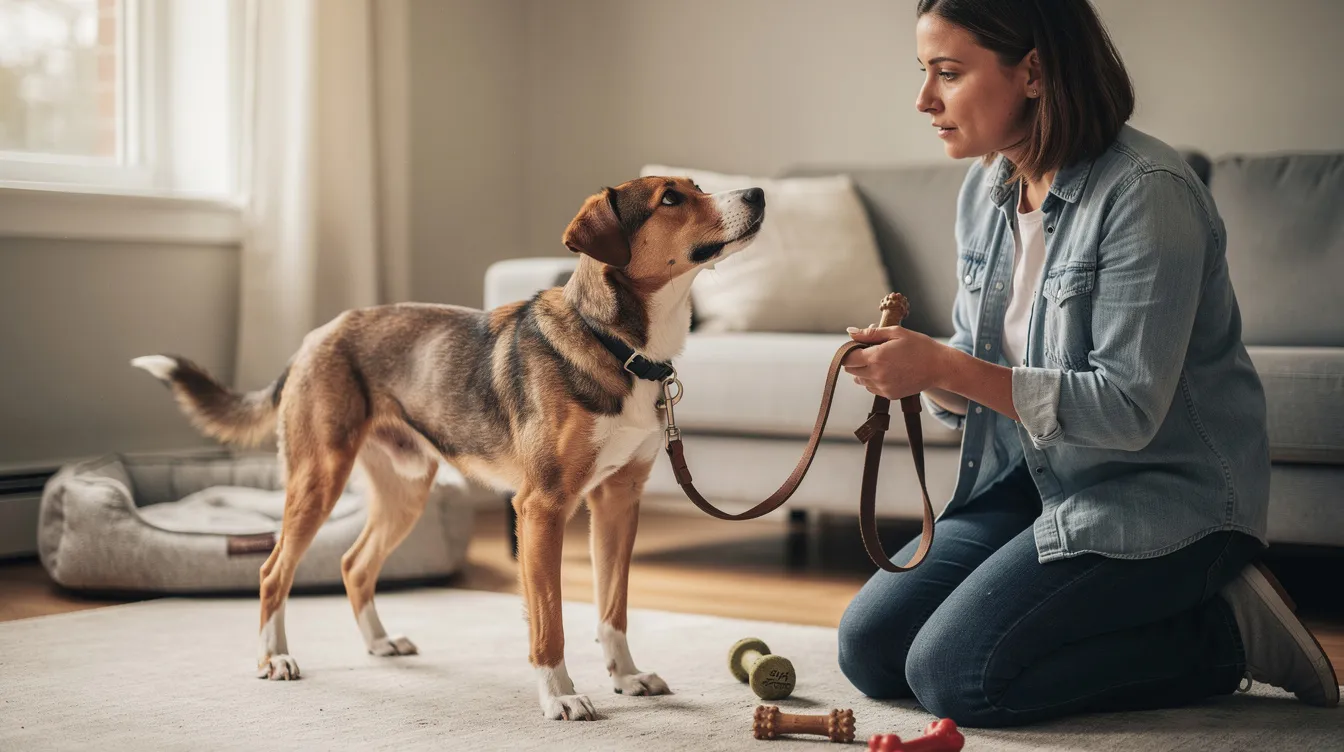
Dog adolescence is the developmental stage between 6 and 18 months of age when your puppy transitions into an adult dog – and it’s often the most challenging time in a dog’s life for owners. If your once-obedient pup has suddenly started ignoring commands, chewing everything in sight, or acting like they’ve never heard the word “come,” you’re likely in the thick of canine adolescence.
This guide covers the behavioral changes, hormonal shifts, and training challenges that define the adolescent phase, with practical management strategies tailored for Northern Virginia dog owners. Whether you’re dealing with a 7-month-old Labrador who’s suddenly forgotten how to walk on a leash or a 14-month-old German Shepherd testing boundaries at every turn, this article is for you.
Dog adolescence is a normal developmental phase – not a sign of a “bad dog.” It’s characterized by hormonal changes, ongoing brain maturation, and temporary training regression. Adolescence in dogs typically occurs between 6 months and 2 years, with most dogs showing the most intense behavioral shifts between 6 and 12 months of age.
Here’s what you’ll gain from reading this guide:
Knowing what’s happening inside your canine teenager – hormonally and neurologically – transforms how you respond to frustrating behaviors. When you understand that your adolescent puppy’s brain is literally under construction, patience becomes easier and your training approach becomes more effective.
Hormonal surges occur during dog adolescence, driving many of the noticeable changes owners observe. In males, testosterone typically begins rising around 4–5 months of age, peaks between 9 and 12 months, then gradually stabilizes as the dog approaches 18 months. Males may show increased marking behavior due to these hormonal changes, along with heightened increased interest in other dogs. Females usually experience their first heat cycle between 6 months and over a year, depending on breed, and females may experience mood swings during their adolescent phase as estrogen and estradiol levels fluctuate.
These hormone levels don’t just affect reproductive development – they directly influence behavior. Hormonal changes can lead to increased impulsivity in adolescent dogs, making previously calm pups suddenly reactive, distractible, or fixated on scents and other dogs. The increased energy that accompanies physical growth spurts compounds the effect: your adolescent dog has more physical power, more hormonal drive, and less self control than at any other developmental stage.
Breed size significantly affects timing. Smaller breeds tend to become sexually mature earlier, often reaching puberty by 6–8 months. Larger breeds may not hit puberty until 12–18 months or later, which means their adolescent period stretches longer – sometimes until 2–3 years of age. A study of Dobermanns found that all males reached puberty between 9 and 12 months, while females showed considerably more variation in timing.
The prefrontal cortex – the brain region responsible for impulse control, decision-making, and emotional regulation – is still actively developing throughout canine adolescence. This is remarkably similar to what happens in human teenagers, whose prefrontal cortices don’t fully mature until their mid-twenties. In dogs, research suggests that functional maturity in inhibitory control circuits may not arrive until 2.5 to 3.5 years, especially in larger breeds.
Brain development leads to increased impulse control challenges in adolescent dogs. Your teenage dog may genuinely understand what “stay” means but lack the neural wiring to consistently override the impulse to chase a squirrel. This is why adolescence can lead to behavioral regression, requiring patience and consistency in training – the skills are often still there, but the brain’s ability to execute them under distraction is compromised.
Research on attachment adds another layer: dogs with less secure attachments to their owners may enter puberty earlier and show greater declines in responsiveness to commands – specifically from their primary caregiver. This means the bond you build during this period directly shapes long-term behavior outcomes.
Understanding these neurological realities sets the stage for recognizing what adolescent behaviors actually look like in daily life.

The brain science translates into specific, observable behaviors that most dogs display during their adolescent period. Knowing which behaviors are a natural part of development – and which signal something more serious – helps owners respond appropriately rather than reactively.
Perhaps the most frustrating hallmark of the teenage phase: your dog suddenly seems to forget everything they learned as a puppy. Commands like “come,” “stay,” and “leave it” that were once reliable now get ignored – especially in distracting environments. Adolescent dogs may test boundaries and show selective hearing, responding perfectly in a quiet living room but acting as though they’ve never heard your voice at a busy park.
This isn’t permanent skill loss. Research published in Biology Letters found that obedience declines temporarily during the onset of adolescence for many dogs, and interestingly, the decline is more pronounced toward their primary caregiver than toward strangers or other trainers. Hormonal fluctuations can temporarily decrease responsiveness to commands, but the underlying learning remains intact. If you’re working on recall during this stage, our guide on training your dog to respond to the come command provides a structured approach that accounts for adolescent distractibility.
Adolescents often experience surging energy and drive requiring physical and mental outlets. Without sufficient exercise and mental stimulation, this energy manifests as unwanted behaviors: excessive chewing, digging, counter-surfing, and general hyperactivity. Adolescence can lead to intensified chewing and digging behaviors that go well beyond what owners experienced during early puppyhood.
Some of this is physical – young dogs may still be getting their adult teeth settled, and chewing provides relief. But much of it stems from the combination of increased energy and a developing brain that hasn’t yet learned appropriate outlets. Adolescent dogs may become frustrated when they can’t get what they want, leading to destructive outbursts that look willful but are really emotional overflow.
It’s important to distinguish normal adolescent destructiveness from pathological behavior. If chewing or digging seems compulsive, persists despite adequate exercise, or is accompanied by signs of separation anxiety – such as destruction occurring only when the owner leaves – it may warrant professional evaluation. For typical adolescent mischief, environmental management and appropriate chew outlets are usually sufficient.
The canine adolescent often shows a noticeable shift in social behavior. Your once-velcro puppy may seem more interested in exploring the environment and socializing with canine friends than staying focused on you. This increased independence is normal and healthy – it’s how young dogs develop social skills and confidence.
However, the adolescent phase can also bring fear periods or overconfidence. Some teenage dogs suddenly become fearful of things they previously ignored – loud noises, unfamiliar people, new environments. Others swing in the opposite direction, showing increased reactivity or even aggression as testosterone or estrogen levels rise. Increased reactivity or fear can occur during adolescence, and emotional volatility is common because neural circuits for emotion regulation are still maturing.
Socialization should continue past puppyhood to prevent fear and reactivity. Controlled interactions with stable adult dogs are recommended for socialization rather than chaotic free-for-all play at dog parks. If your dog is showing signs of reactivity toward other dogs or people, our resource on aggression and reactivity can help you understand whether you’re seeing normal adolescent behavior or something that needs specialized intervention.
Understanding these behavioral patterns equips you to implement targeted management strategies rather than reacting with frustration.

Armed with an understanding of what’s happening in your adolescent dog’s body and brain, you can apply training strategies that work with biology rather than against it. The goal during this period isn’t perfection – it’s maintaining and gradually strengthening the foundation you built during puppyhood while helping your dog navigate the transition to becoming a well adjusted adult.
Structured routines can reduce stress and behavioral issues in adolescent dogs. Here’s a proven framework for maintaining training progress during the teenage phase:
Adolescent dogs need both physical and mental outlets. The table below provides general guidelines by breed size:
| Activity Type | Smaller Breeds | Medium Breeds | Larger Breeds |
|---|---|---|---|
| Physical exercise | 30–60 min/day in short bursts | 60–90 min/day | 60–120 min/day, lower intensity |
| Mental stimulation | 2–3 puzzle sessions/day | 2–3 enrichment activities/day | 2–4 enrichment activities/day |
| Structured training | 3–5 short sessions/day | 3–5 short sessions/day | 3–5 short sessions/day |
| Structured rest | Regular nap periods | Enforced downtime between activities | Extended rest (growth demands) |
Activities like puzzle toys keep adolescent dogs mentally stimulated and can be more effective at tiring out a teenage dog than physical exercise alone. Scent work, interactive games, food puzzles, and obedience drills all provide the mental engagement adolescent dogs need to prevent boredom-related mischief. Regular exercise helps burn excess energy in adolescent dogs, but mental enrichment and structured rest are equally important for managing adolescent behavior.
In Northern Virginia, seasonal considerations matter. Hot summers and cold winters mean indoor enrichment – frozen Kongs, snuffle mats, hide-and-seek games – becomes essential on days when long walks aren’t feasible. For guidance on maintaining obedience during walks across seasons, structured walking drills provide both physical and mental challenges.
With the right exercise and training plan in place, you’ll be better equipped to address the specific challenges that arise during this period.
Northern Virginia dog owners face particular challenges during their dog’s adolescent period: busy suburban parks, strict leash regulations, close neighbors, and abundant wildlife distractions. Here are solutions for the most frequent issues our expert team encounters.
When your adolescent puppy stops responding to recall, the solution isn’t to repeat commands louder – it’s to rebuild the foundation. Adolescent dogs require consistent reinforcement of commands and behaviors, especially recall.
Go back to basics: practice recall in your living room, then your backyard, then a quiet park on a long line. Use “life rewards” – access to a favorite toy, permission to greet a friend, release to sniff – as additional motivation when your dog responds immediately. Avoid chaotic environments to reduce socialization challenges while you’re rebuilding this skill. For persistent recall problems, e-collar training for recall reliability can provide a consistent communication tool at distance, particularly valuable in Northern Virginia’s park environments.
Provide mental stimulation to prevent boredom-related mischief – this is your first line of defense. Manage the environment by restricting access to high-value chewable items, rotating durable chew toys to maintain novelty, and providing appropriate outlets before your pup finds inappropriate ones. Structured play and exercise sessions are essential for adolescent dogs dealing with the combination of adult teeth, surging hormones, and boundless energy.
Use positive reinforcement to encourage desired behaviors: when your dog chooses the appropriate chew toy over your shoe, reward that choice enthusiastically. Crating or using a safe zone during supervision gaps isn’t punishment – it’s setting your adolescent dog up for success rather than failure.
Reactivity tends to peak during this developmental stage as hormonal and social changes collide with limited impulse control. Dogs may require re-socialization during their adolescent years, particularly if early socialization was incomplete. Structured socialization significantly lowers adult behavior problems, so continued controlled exposure remains critical.
For mild reactivity, distance management and counterconditioning – rewarding calm behavior in the presence of triggers at manageable distances – is effective. For more intense reactivity, professional behavior modification is recommended. Our reactive dog training programs address adolescent reactivity with systematic desensitization techniques. In severe cases involving resource guarding or aggression, certified behaviorists may incorporate pharmacological support alongside behavior modification.
Knowing when to handle challenges yourself and when to seek professional support is a critical skill during this period.
Dog adolescence is a temporary but significant phase – a natural part of your dog’s development that typically spans from about 6 months to 2 years of age. The hormonal changes, prefrontal cortex development, and emotional volatility your canine teenager is experiencing are biologically normal, not signs of a fundamentally flawed dog. With understanding, patience, and consistent training, most dogs emerge from adolescence as well adjusted adult companions.
Here are your immediate action steps:
If your adolescent dog’s behaviors persist beyond what you can manage – or if you’re looking for specialized training such as reliable off-leash obedience – professional guidance can accelerate progress and prevent negative experiences from becoming ingrained habits. A board-and-train program can be particularly effective for adolescent dogs who need intensive distraction-proofing in a structured environment.
Off Leash K9 Training Northern Virginia offers free consultations for owners navigating the adolescent phase. Our programs are specifically designed to address the challenges teenage dogs present – from recall reliability to reactivity management.
For dogs in the earlier stages of development, our understanding puppy development stages guide helps you prepare for what’s ahead. If your pup is just entering the 6-month mark, our puppy training programs in Northern Virginia build the good habits and strong foundation that make adolescence more manageable for both you and your dog.
Contact our team for a free consultation and learn how our training programs across Falls Church, Arlington, Fairfax, and throughout Northern Virginia can help your dog navigate adolescence with confidence.